
Bolivia, Hearth Of South America
Bolivia offers a wide variety of landscapes that amaze tourists with their diversity. From the Andes Mountains and volcanoes, high plains, salt flats, and Lake.
Did you Know the History of Bolivia?
Bolivian history begins way before Bolivia was ever a country. In its territory was home to some of the most advanced pre-Hispanic civilizations, the houses of Tiwanaku, especially the knowledge of architecture and astronomy. It later became part of the Inca Empire, which significantly molded Andean culture.
The Spanish arrived in the 16th century. They seized these lands and the principal cities they founded, among them Potosí, which became one of the wealthiest cities in the world due to its famous silver mine, the Cerro Rico. Bolivia was a Spanish colony for nearly 300 years.
Bolivia became independent at last on August 6, 1825. The country was aptly named for Simón Bolívar, the primary leader of liberation throughout South America.
The country fought wars with neighboring countries and lost part of its territory and had difficult moments with dictatorships and political crises after independence. Yet there were other moments of progress, reversion to democracy among them, and a deeper reverence for its Indigenous roots.
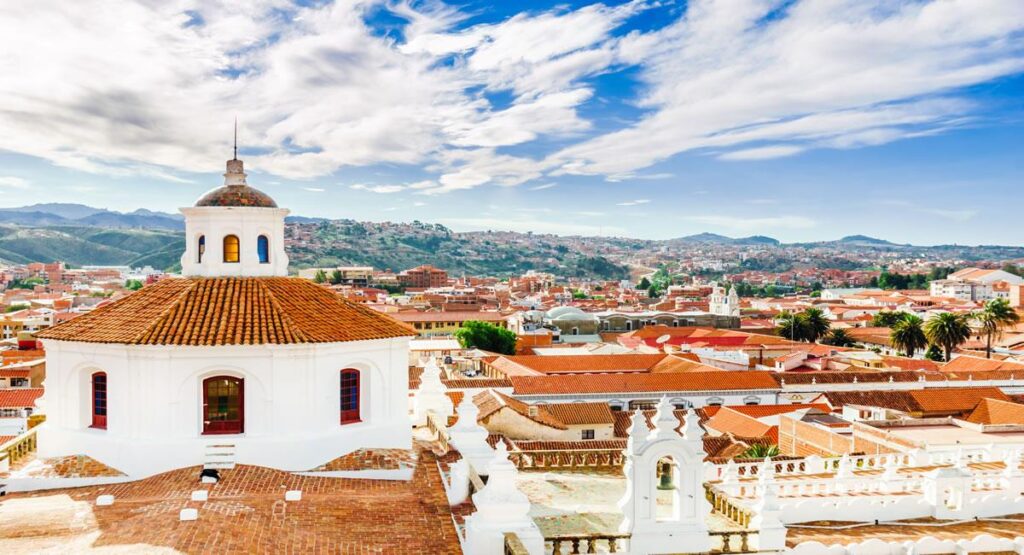
In 2009, Bolivia adopted a new Constitution that among other things recognizes in legally binding terms its plurinational character, which is to say that it is home for a great many cultures and Indigenous peoples who live themselves together in Bolivia.
Amazonia
Literally in the east, Bolivia encompasses the lowest point in the country, at sea level, as well as much of Lake Titicaca. It’s hot in here, thick with trees, plants and animals. There is as well the Gran Chaco, an arid but, in places, fertile natural region.
Bolivia also borders Lake Titicaca with Peru. It is the world’s highest lake that boats can sail on, and from it comes important and culture-enriching history for the country.
Bolivia Geographic Diverse
Bolivia is such a landscapey country. Although it does not have a sea, its territory has numerous types of nature, climatic conditions and views.
In the west there are the Andes Mountains with very high peaks such as Illimani and Sajama, these mountains have a lot of snow. Together there’s the Altiplano, a high, cold and arid area where some people live. Such cities as La Paz, Oruro and Potosí are there.
And then there is the Salar de Uyuni, the largest salt flat in the world. It all seems white, and when it rains, it’s as if there is a giant mirror.
Virginia Warm weather valleys lie in the heart of the country. There are fruits, vegetables and flowers that people grow there. Cochabamba is a major city in the area.
Culture of Bolivia
Bolivia is one of the richest countries in culture. Its culture is unique, you see because it blends the natives, the Spanish, and many others.
There are 36 official Indigenous cultures including the Aymara, Quechua, Guaraní and many more. They all have their own language, dress in different clothes, have music, and customs, so Bolivia is a very diverse country.
Bolivia is a country with music and dance ingrained deep into its culture. In honor of the Goddess of the Earth, there are Morenada, Diablada, Caporales, and Tinku dances performed during grand festivals like Oruro Carnival, which has worldwide repute.
There’s also a large amount of handcrafted art, including brightly colored fabrics, pottery, masks and jewelry. But each faction has its own style and colors.
Rich culture
And Bolivian food is rooted in its culture, too. Typical dishes such as Plato Paceño, salteñas, fricasé and chairo incorporate local ingredients and traditional recipes.
Diablada
The Tinku is a danced ritual. It has forceful, rapid motions representative of a battle ritualized between villages.
These dances are represented on many important holidays, and the Carnaval de Oruro is one of the most well known, to the point of having been recognized as a Cultural Heritage of Humanity by UNESCO.
Dance and Music from Bolivia
Music and folk dances are one of the most essential aspects of the Bolivian culture. They tell stories, celebrate festivals and keep alive the identity of the many peoples in the country through them.
In Bolivia, various types of music are heard; some, like batucada, employ typical instruments such as the charango (a kind of guitar), the zampoña (pan pipes), and the quena (an Andean flute). These are the sounds that render the music joyful and full of life.
Classical dances are also very colourful and diverse. One well known dance is the Morenada, portraying African slaves brought over during the colonial period. It is famous for its masked costumes and slow, graceful movement.
Another significant dance is the Diablada, which is a fusion of indigenous and Catholic traditions. The dancers put on devil masks and move quickly and energetically.
Caporales is a more modern, energetic and lively dance that emerged in the 1960s. It is the face of the stewards of big ranches, and is widely known in fairs.